
Accompanying guests are welcome!
Information about Accompanying person registration is available on the page page Registration
All the accompanying guests (“spouses”) take part in the following social events for the participants of the 10-th International Oat Conference: Welcome reception «Get Together» and official conference dinner, but they are not permitted to attend the Conference sessions and Daily catering during the Conference. In addition there will be organized an official sightseeing program for accompanying guests with English speaking guide during the days of 10-th International Oat Conference.
The price of participation in Accompanying person program - $ 400
Accompanying person program
|
Monday, 11 July |
|
|
20:00 – 22:00 |
Welcome reception “Get together” |
|
Tuesday, 12 July |
|
|
12:30 – 13:30 |
Fabergé Museum Tour |
|
|
|
|
14:00 – 15:00 |
Lunch in the cities restaurant |
|
15:30 – 16:30 |
Saint Isaac’s Cathedral Tour |
|
|
|
|
17:30 |
Arrival to Park Inn Pulkovskaya Hotel |
|
19:30-22:30 |
Official conference dinner with participants of 10-th International Oat Conference |
|
Wednesday, 13 July |
|
|
12:00 – 13:30 |
Visit to the Hermitage Museum |
|
|
Today, the Hermitage boasts over 2.7 million exhibits and displays a diverse range of art and artifacts from all over the world and from throughout history (from Ancient Egypt to the early 20th century Europe). The Hermitage's collections include works by Leonardo da Vinci, Michelangelo, Raphael and Titian, a unique collection of Rembrandt and Rubens. |
|
14:00 – 15:00 |
Lunch in the cities restaurant |
|
15:00 – 17:00 |
Peter and Paul Fortress Tour |
|
|
|
|
18:00 |
Arrival to Park Inn Pulkovskaya Hotel |
|
Thursday, 14 July |
|
|
11:00 – 12:00 |
Church of the Savior on Blood Tour
|
|
|
The Church of the Resurrection, known as the "Saviour on the Blood", was erected between 1883 and 1907 on the site where, on 1 March 1881, Emperor Alexander II was mortally wounded by a bomb thrown by Ignatiy Grinevitskiy, a member of the People's Will organization. Restoration work on the church started in 1970 and its reopening in 1997 was an important event in the cultural life of the city.
|
|
12:00 – 13:00 |
Transfer to Pushkin |
|
13:00 – 14:30 |
Lunch in the restaurant “Russkoe Zastolje” in Pushkin |
|
15:30 – 18:00 |
Pavlovsk Palace Tour with participants of 10-th International Oat Conference |
|
|
|
|
19:00 |
Arrival to Park Inn Pulkovskaya Hotel |
|
Friday, 15 July |
|
|
The first half of the day is FREE |
|
|
16:00-19:30 |
Bus guided city tour |
|
|
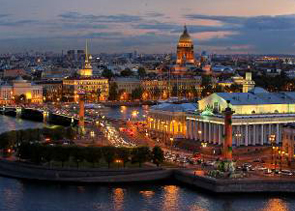 St. Petersburg is one of the world's most beautiful cities, it has all the ingredients for an unforgettable travel experience: high art, lavish architecture, wild nightlife, an extraordinary history and rich cultural traditions that have inspired and nurtured some of the modern world's greatest literature, music, and visual art. From the mysterious twilight of the White Nights to world-beating opera and ballet productions on magical winter evenings, St. Petersburg charms and entices in every season.
|
|
19:30 |
Transfer to Park Inn Pulkovskaya Hotel |
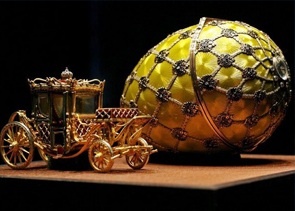 Fabergé Museum's collection contains the world's largest collection of works by Carl Fabergé, including nine of the famous Imperial Easter Eggs, regarded not only as the finest jeweled works of art, but also as unique historical artifacts. The museum's collection also includes decorative and applied works made by the Russian masters of the late 19th and early 20th centuries. The museum is located in the Shuvalov Palace on the Fontanka River - one of the most beautiful palaces in St. Petersburg.
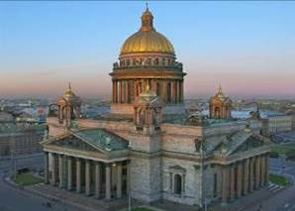 Saint Isaac’s Cathedral is one of the world’s largest domed cathedrals. This massive church and its golden dome can be seen from many locations in St. Petersburg. St. Isaac’s Cathedral was commissioned in 1818 by Tsar Alexander I to celebrate the victory over Napoleon, and the French architect Auguste de Montferrand was the designer. St. Isaac’s took 40 years to build, and Montferrand died the year it opened. It sits on a marshy bank of the Neva River, and thousands of huge wooden pilings were sunk into the mud to support the church. The exterior of the cathedral is of Renaissance and Baroque design, and the interior is spectacular because of the mosaics and many precious stones and minerals used. The golden dome is covered with 220 pounds of gold. During the Soviet era, the Orthodox Church was closed to worshipers and became a museum of atheism. Fortunately, many of the wonderful 19th century works of art were retained and decorate today’s St. Isaac’s.
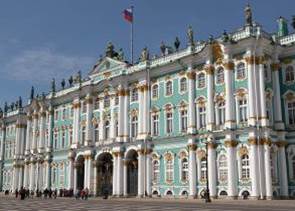 The Hermitage Museum is Russia's best gallery of world art, one of the most prominent art museums in the world and definitely the main tourist attraction of St. Petersburg. The museum was founded in 1764 when Catherine the Great purchased a collection of 255 paintings from the German city of Berlin.
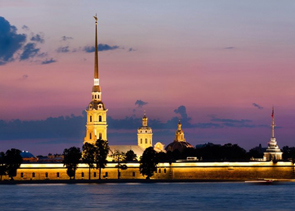 When
When 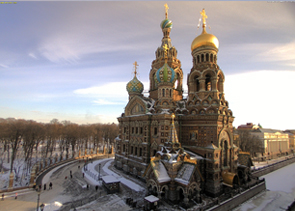 The Church of the Savior on Spilled Blood is one of the main sights of
 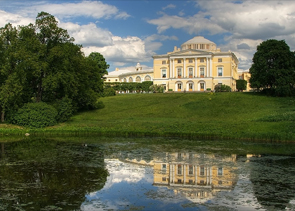 Pavlovsk is a former Summer residence of Emperor Paul I and his wife. It is a wonderful summer palace with a huge English type landscape park around it. It was constructed at the end of the 18th century. Its delicate, elegant and harmonious classical style interiors will not display bright and luxurious gildings which are so typical for the Russian baroque. Instead it will strike you with its own special charm, impeccable proportions and perfect taste. Pavlovsk still bears traces of personality of its owners. It also has a collection of original furniture, clocks, porcelain and other pieces of art and applied art, which is the richest collection among the Summer palaces.